William A. Potter, U.S. Post Office and Customs House, 1874-1880. The only open space within a three block radius. (Gilbert, Chicago)
The plan to bring the C&WI tracks into Chicago inline with Dearborn coincided with the approaching completion of the U.S. Post Office and Custom House. Although originally designed in 1872 following the fire (see Vol. 1) by Alfred Mullet, then the Superintending Architect for the Treasury Department, Mullet died in 1874 and was replaced by William A. Potter who deserves the credit for its final appearance. Potter had stepped down in 1877 and was replaced with James G. Hill who supervised building’s completion. The Post Office took possession of its space on April 12, 1879, while construction continued into early 1880. Fortunately the Federal Government had purchased the entire site that in 1872 was was much larger than what the building’s program required, leaving the perimeter of the lot open as a much needed park. The Post Office was located on the ground floor, with the letter distribution room being located under the building’s huge 83′ x 198′ skylight.
William A.Potter, U.S. Post Office and Customs House, 1874-1880. Looking south from Adams Street. Note the skylight (83′ x 198′) at the second floor at the bottom of the lightcourt. (Rand McNally View #3)
With the new Post Office finally generating pedestrian traffic along Dearborn, that is, at least as far as Jackson, where the city’s construction of Dearborn had stopped, combined with the upturn in the national economy and the secret plan to build a new set of tracks into Chicago for the C&WI, the Brookses needed a local agent on the ground who could secretly buy up properties not only for the station, but also for speculative development, before news of the new railroad would go public. Within weeks of Vanderbilt’s actions, the Brookses had retained local attorney Owen F. Aldis (1853-1925) in February 1879 to manage their Chicago properties.
Burnham & Root, Grannis Block, Chicago, 1880. East side of Dearborn, between Madison and Washington. (Online)
The twenty-five year old Aldis had the requisite New England genes, as he had been born in Vermont into a family whose grandfather and father had both been the State’s Supreme Court’s Chief Justice, had graduated from Yale in 1874 and then studied law at the Columbian School in Washington, DC. After having completed law school, he was enticed by his new brother-in-law, Bryan Lathrop, a Chicago real estate financier who had just married Aldis’ older sister, Helen Lynde Aldis (1849-1935) in 1875. (Note that it was pure serendipity, the fact that one of Chicago’s more powerful financiers fell in love with Owen’s older sister, that was responsible for this twenty-two year old Washington, DC lawyer becoming over time in control of over 25% of all Chicago commercial real estate.) As I documented in Volume One, Lathrop was the nephew of local real estate magnate Thomas Bryan (who had taken over William Ogden’s unofficial role as Chicago’s “First Citizen” as Ogden grew older), who had become one of the city’s more successful and wealthier men. Bryan had groomed his nephew to be his protégé and under the tutelage of his uncle, Lathrop had quickly grown to be one of Chicago’s leading real estate managers, sharing in his uncle’s profitable investments, including life insurance, and in 1878 had succeeded his uncle as the President of Graceland cemetery.
As his uncle had introduced him to Chicago’s business community some ten years earlier, Lathrop was now returning the favor for his new brother-in-law Owen, by inviting him to come to Chicago to work with him. Aldis’ father, Vermont’s Judge Asa O. Aldis, had helped launch his son’s career in property management by handing over the control of the few local properties he had purchased after the 1871 fire. Aldis had completed his new familial arrangements in December 1878 by marrying Leila Russell Houghteling, the eldest daughter of William De Zeng Houghteling, a prominent lumber merchant, just prior to being chosen to represent the interests of who would become Chicago’s most important commercial real estate developers in the coming decade.
1.17. THE BROOKES HIRE ALDIS AS THEIR AGENT
Within weeks of Aldis’ wedding, Vanderbilt had closed the MC tracks to the GT triggering the investor group’s secret campaign to build the new C&WI route into Chicago. Those involved knew they had to move fast before news of their plans became public. Within a month of Vanderbilt’s actions, the Brookses hired Aldis in February 1879 to be their manager for their Chicago interests, including the Portland Block at the southeast corner of Dearborn and Washington. (As I have not been able to uncover who was their agent prior to their contract with Aldis, I can only assign this important decision to the influence of Lathrop, who was taking over the reins of Graceland at this exact moment and could have wanted to hand the Brookses’ interests over to Aldis.) We will learn later that the railroad’s investors were planning to locate the station inline with Dearborn, north of Harrison where the Brookses had already obtained the land through Aldis who secretly had used the name of Shepherd’s wife, Clara G. Brooks under the name of “D” before the railroad’s incorporation was publicly announced on June 5, 1879. Obviously, it was to the railroad’s advantage locate its station as close to the business district as possible in order to compete with Vanderbilt’s La Salle Street station, that would have been only two blocks closer at Van Buren had these plans succeeded.
William Le Baron Jenney, Post-fire Portland Block, Chicago, 1872. Only the first four floors were erected in 1872. (The Land Owner, June 1873)
Meanwhile, Shepherd Brooks had also managed to acquire the lot on Dearborn immediately south of the Portland Block, for which he requested in 1880 that Aldis find someone interested in leasing the site for the purpose of erecting an office building. Shepherd was more conservative than his older brother Peter and was not the least bit interested in speculating, as was revealed in the final lease agreement. Aldis located a client in local builder Amos Grannis, who agreed to lease the site for forty years, paying 32 lbs. 3 oz. of gold for the first twenty years.
Portland Block with two-story addition, 1880. Next to it is Burnham & Root’s Grannis Block, 1880. View is looking south down Dearborn. (Online)
Portland Block with two-story addition, 1880. Next to it is Burnham & Root’s rebuilt Grannis Block following its 1886 fire. The top two floors were rebuilt, which you can compare against the original. (Andreas, History of Chicago)
At the same time, September 1880, the Brookses decided to add two floors to the adjacent Portland Block, whose design followed neither Jenney’s original design nor the new rectilinear language of his Leiter Building, which leads one to speculate which architect Aldis had hired to design of the addition. Meanwhile, across Dearborn at the southeast corner with Washington, the Kendall Building was also finally acquiring two additional floors that it was to originally have had ten years earlier because:
“there are many young attorneys, architects, artists, physicians, agents and others, who are commencing independent careers, and though it is necessary in order to get business to be centrally located, they cannot afford to pay such rents as are commanded by lower floors. With the perfected elevator convenience, it makes but little difference if they are located on the 5th or 6th floor, business point, tho, there is a savings in rents. If the fireproof ordinances are observed, and foundation walls are strong enough, there is no objection to putting on as many floors to any business block in this city.”
John Van Osdel, Kendall Block, with the 1878 addition of three more floors. Note how the horizontal layering of each floor allows the original design to gracefully accept the addition and still look complete. (Andreas, History of Chicago)
At a reception one night in mid-1880, Aldis had made the acquaintance of a relatively unknown architect, John Root (Root -30, Aldis- 27). The pair had hit it off immediately and had made their way to a small room where they could converse undisturbed. The two bid their farewells around 1 in the morning, Root having had no idea who his new friend was. From such a chance encounter would grow some of the world’s most famous buildings, for Aldis came away from the conversation that evening “knowing he [Root] was a genius, and the next day I brought [to Root’s surprise I’m sure] him a building.” (And it was just not another “building,” but a seven-story commercial office building!) Aldis’ commission to design Amos Grannis’ new building (and I think the addition to the Portland Block as they were done at the same time) gave the young firm its first opportunity to design a multistory office building, and would launch Burnham & Root on a trajectory that would see them not only become the largest architectural firm in the U.S., but also play a seminal role in the development of a building type that would soon be called “the skyscraper.”
FURTHER READING:
Berger, Miles L. They Built Chicago: Entreprenuers Who Shaped a Great City’sArchitecture. Chicago: Bonus Books, 1992.
Funigiello, Philip J. Florence Lathrop Page. Charlottesville: University of Virginia, 1994.
Monroe, Harriet. John Wellborn Root; A Study of His Life and Work. Park Forest: Prairie School Press, 1966.
View Down La Salle Street. The La Salle Street Station is at end of the vista. (Gilbert, Chicago and Its Makers)
The answer to the Dearborn Street question revolves around “Commodore” Vanderbilt, even though he had died two years earlier in 1877. While on the surface, one would have thought the effects of the depression would have been negative, or at best neutral, to the development of Dearborn, the depression, however, actually allowed Dearborn to acquire the one element that, prior to the panic, La Salle Street alone had possessed and as a consequence, had maintained a natural advantage over Dearborn in the development battle. The advantage that La Salle Street enjoyed was provided by Vanderbilt’s Lake Shore and Michigan Southern Railroad Station. Although he had played no part in the location or erection of the pre-fire station, by the time of the 1871 fire, Vanderbilt had acquired complete control over the these railroads and the station, that also explains why it was the only station of the three destroyed by the fire (the IC and the C&NW being the other two) that was immediately rebuilt, and to which the city had recently extended La Salle Street one block farther south from Jackson through to Van Buren Street.
La Salle Street Extension to the La Salle Street Station, 1874. La Salle has been extended to the Michigan Southern Station. This is the reason for this station being named the La Salle Street Station, eventhough the Board of Trade will ask for this block to build a new building in 1881, which will divorce the station from La Salle Street once again, and will lead people today to ask why the station was not known as the Van Buren Street Station. (The Land Owner, July 1873)
The depression had also allowed Vanderbilt, through a series of clever stock manipulations, to buy the Michigan Central right out from under the noses of its Bostonian builders. This action not only severed the eastern link (the MC) of the Bostonians’ highly profitable Chicago, Burlington and Quincy Railroad, its western link to Council Bluffs and the Union Pacific, but also had finally gained Vanderbilt a virtual monopoly of all rail traffic between Chicago and New York. The only rail route from Chicago to the Northeast that had escaped the Commodore had been the Canadian Grand Trunk Railroad, yet even it had to rely on Vanderbilt’s good will to use the MC’s tracks to enter Chicago. (While the Pennsylvania RR avoided Vanderbilt’s reach, its tracks went farther south through Pennsylvania to Philadelphia, and then up into New York City. It offered no alternative for the Grand Trunk.) The Commodore had died on January 4, 1877, leaving his son, William H., a rail empire that controlled virtually all of the traffic between Chicago and the Northeast. In one last grand attempt to complete the monopoly, William tried in early 1879 to close off the Canadian route by prohibitively increasing the Grand Trunk’s user fees for the MC’s tracks into Chicago. This one act would have great ramifications on the development of Chicago’s Loop, for Vanderbilt’s total control of all rail traffic to the Northeast was simply intolerable for too many powerful financial interests, and the only solution was the construction of a new railroad (and station) from the Northeast into Chicago.
1.15. THE BROOKS BROTHERS AND THE DEARBORN STREET STATION
“The Modern Colossus of (Rail) Roads,” cartoon in 1879 Puck, Vol. VI, No. 44. In addition to Vanderbilt standing astride his rail empire, the image also includes Cyrus W. Field, Pres. of the NY Elevated RR, and Jay Gould, Pres. of the Union Pacific. (online)
The younger Vanderbilt had quickly met his match, for he had not only crossed swords with the Bostonians and Sir Henry Tyler, the strong-willed president of the Grand Trunk, but more importantly, he came into direct conflict with the investments of one of the world’s largest financial institutions, the House of Baring in London, who were quietly financing, in league with the Bostonians, their own transcontinental route from the Pacific and the China trade to the East, in the form of the Atchison, Topeka and Santa Fe Railroad. The younger Vanderbilt had severed the last available Eastern link in this route, which was simply unacceptable to all those financially involved with building the Santa Fe. Responding to Vanderbilt’s challenge, Tyler announced that he would, unilaterally, build a new route from Detroit into Chicago. On June 5, 1879, the Chicago and Western Indiana Railroad was formally incorporated, destined to become the Chicago entrance for all of Vanderbilt’s embittered rivals: Tyler’s Grand Trunk Western; the Baring’s and Bostonians’ Santa Fe; and even the New York Central’s perennial enemy, the Erie. The paramount issue faced by Tyler and the other C. & W. I. investors was where to locate the new station in Chicago’s business district. Its location would not only directly affect the success of the new railroad, but even more importantly, would easily generate huge profits in land speculation immediately adjacent to the new station. Entire fortunes were at stake upon this decision.
Map of the Grand Trunk Railroad’s new track to Chicago, 1879-80. (Online)
It was quite natural that the final location of the station should be influenced by Bostonians, for much of the financial support of the parent railroads came from Boston. One of Boston’s leading railroad experts, Charles Francis Adams, Jr., an investor in both the C. B. & Q. and the Santa Fe, and destined to become president of the Union Pacific in 1889, was a grandson of the elder Peter Chardon Brooks, meaning that he was a cousin of Peter and Shepherd Brooks, owners of the Portland Block on Dearborn Street. There can be little doubt about the fact that these three powerful cousins in Boston were intimately involved in the decision to build the new C. & W. I. station in line with Dearborn Street. The railroad battle between Boston and New York was about to spill over into a new arena: would Dearborn or La Salle Street emerge as the north/south replacement for the Washington Street office corridor?
FURTHER READING:
Stevens, George R. The Canadian National Railway. New York, Macmillan, 1973.
If you were Peter or Shepherd Brooks and planning to build the first new speculative office building in 1879 Chicago, following the end of the Depression, where would you build it? While the 1871 fire had finally given Jenney an opportunity to design two downtown buildings, the Lakeside Building and the Portland Block, owned by the Brookses, the Bostonians did not return to him as the economy was improving, even though he was designing Leiter’s new building at that moment, to design their first post-recession speculative office building. This is especially noteworthy because the lot for their planned building was directly south of Jenney’s Portland Block that stood at the southeast corner of Dearborn and Washington. This fact leaves us with two questions?
1. Why did the Brooks continue to invest in Dearborn while the centroid of the reconstructed business district had shifted to the west and south with the temporary city hall and the relocation of the Custom House?
2. Why did they not continue with Jenney as their architect?
William Le Baron Jenney, Portland Block, Chicago, 1872. Southeast corner of Dearborn and Washington. (Online)
1.13. DEARBORN VS. LA SALLE: ACT TWO
It did not take long for office space construction to return to Chicago, once New York and the East Coast had started to rebound from the depression. The issue in Chicago of establishing the north/south (or railroad) office corridor to replace the original east/west (or river) office/financial corridor of Washington Street that had been stalled by the depression, would be resolved during the upcoming five-year period of economic expansion. In Volume One, I had discussed how Chicago’s urban structure, that had originally grown in an east-west axis paralleling the river (i.e., Water (W.Wacker)-warehouses, Lake-retail commercial, Randolph-hotel/office, Washington-churches) had rotated 90° to the south, in response to the Eastern railroads that came into town from the south, having to go around the bottom of Lake Michigan. (In truth, one might argue as some have tried, that because the lake stopped growth to the east, and the river, for all practical purposes, did likewise to the north and west, south was the only way for the city’s business district to grow. But this argument loses its credibility when one looks at all of the underbuilt sites in the business district that remained in 1880.)
State Street, looking south from Lake Street, c.1869-71. (Wade and Meyer, Chicago: Growth of a Metropolis)
The churches had moved to S. Wabash, the pre-fire wholesale district had moved to N. Wabash, only to move after the fire to Market (N. Wacker), Potter Palmer had made State Street the new commercial strip, while competing interests developed Dearborn versus La Salle as the office/financial district.
Looking south along Dearborn from Monroe before the 1871 fire. H.H. Honoré’s Real Estate Exchange (1868) is in the foreground, and the Bigelow House (the only photo of this building I have been able to find) is one block south at the southwest corner of Adams Street (where the post-fire Post Office/Customs House will be erected.) (Online)
The Brookses’ original Portland Block of 1857, at the southeast corner of Dearborn and Washington had marked the rotation of the Washington Street office/financial district to Dearborn that was to be reinforced before the fire with the erection of the city’s first skyscraper, the Kendall Block at the southwest corner. Following the end of the war, H.H. Honoré’s (whose daughter Bertha had married Potter Palmer in 1870) had extended Dearborn south of the pre-fire Post Office and Custom House with the construction of three large office buildings between Monroe and Adams, seemingly in an attempt to parallel his new son-in-law’s development of State Street.
Looking south down La Salle from the Courthouse, pre-1871 fire. John M. Van Osdel, City Hall-County Courthouse, Additional floor and dome, 1858. (right) Burling and Baumann, Chamber of Commerce, 1865. (Jevne & Almini, Chicago Illustrated)
However, La Salle Street had the Courthouse/City Hall with the Chamber of Commerce at the southeast corner of Washington (mirroring the Portland Block’s location) at the north end, and it ran south to the one advantage that Dearborn did not possess, the station for the Michigan Southern/Rock Island Railroad.
W.W. Boyington, Post-Fire Lake Shore & Michigan Southern Station, 1872. Note the company’s name has been updated from the “Michigan Southern & Northern Indiana” to the Vanderbilt “Lake Shore & Michigan Southern.” (Chicago Historical Society)
I documented William Ogden’s personal investment with both railroads in Volume One, so it was no coincidence that in 1871 he began construction of the Nixon Building at the northeast corner of La Salle and Monroe, exactly midway along La Salle between the station and City Hall (seemingly as a parry to Honoré’s Dearborn development).
John M. Van Osdel, Post-Fire Temporary City Hall, the “Rookery,” 1872-1885. Southeast corner of La Salle and Adams. Built around the Waterworks Water Tank that had survived the 1871 Fire, the tank acted as storage for over 8,000 books that were sent by Queen Victoria and Great Britain in the aftermath of the fire. (Online)
The 1871 fire had forced City Hall to relocate to the surviving Water Reservoir at the southeast corner of La Salle and Adams, extending La Salle Street’s prime real estate another three and half block farther south, exactly as how the relocation of the Post Office/Customs House to Dearborn and Adams had provided a similar incentive along Dearborn. Quite frankly, a chess game could not have been played more masterfully, with the exception that Dearborn lacked a railroad station.
La Salle Street Extension to the La Salle Street Station, 1874. La Salle has been extended to the Michigan Southern Station. This is the reason for this station being named the La Salle Street Station, eventhough the Board of Trade will ask for this block to build a new building in 1881, which will divorce the station from La Salle Street once again, and will lead people today to ask why the station was not known as the Van Buren Street Station. This illustration was made to showcase a post-fire proposal in 1874 to build a market in the block bounded by Adams, Fifth (Wells), Jackson, and Franklin. Note the post-fire City Hall with its domed skylight providing light for the library located within the old cylindrical water tank, in the lower lefthand corner, above which is shown the Grand Pacific Hotel. (The Land Owner, July 1873)
Boston’s Brooks brothers apparently had decided to cast their lot with Dearborn Street after the 1871 fire, when they chose to rebuild their Portland Block according to Jenney’s design, across Dearborn from where the shortened, post-fire version of the Kendall was being erected. In Volume One I had documented the suspicious nature of the move of the Post Office two blocks farther south on Dearborn, to the south to the block bounded by Dearborn, Adams, Clark and Jackson Streets, that provided a natural magnet to pull development south along Dearborn and noted that someone had made a bundle by selling this property to the Federal government. One must at least speculate, based on what we about to uncover, whether the Brookses had inside information or any involvement with this particular transaction.
William A. Potter, Post-Fire U.S. Post Office and Custom House, 1874-80. Block bounded by Adams, Dearborn, Jackson, and Clark. (Gilbert, Chicago and Its Makers)
As the Leiter Building contained only one-fifth the floor area of the Shillito’s Store, there was no reason to incur the expense of duplicating McLaughlin’s use of iron girders in such a small structure. (The Shillito’s Store had a footprint of 270′ x 174′ while the Leiter Building’s was a mere 102′ x 82′. The Shillito’s Store had 567 lineal feet of six-story facade, while the Leiter Building’s five-story facades measured 184 lineal feet, over 85′ shorter than just the front of Shillito’s.) Jenney, therefore, used cast iron columns to support heavy timber beams at each floor.
Jenney, First Leiter Building. First Floor Plan. Iron pilasters at the inside face of the Wells Street piers are circled. The arrows indicate the direction in which the wood joists run. (Art Institute of Chicago)
The floors were constructed in a standard manner, using 3″ x 12″ wooden joists on 9″ centers that ran between primary beams upon which was placed wood decking. (Contrary to the popularly-held legend that wood construction was outlawed after the 1871 fire, wood had been used in Chicago’s buildings some eight years after the fire, and would continue to be so for another six.) The timber beams ran parallel to the Monroe Street front, meaning that the Wells Street piers would have normally been used to support the ends of the timber beams. This detail would, however, have required Jenney to increase the cross-section of the Wells Street piers to enable them to support the additional concentrated loads from the ends of the beams, and then to correspondingly increase the required section of the Monroe Street piers for symmetry (that was the apparent solution McLaughlin chose in the Shillito’s store as both sets of piers have the same dimensions). Doing this, however, would have resulted in a corresponding reduction in the amount of daylight received by the interior (Jenney’s primary concern as already seen in his design of the Portland Block).
Jenney, First Leiter Building, 1879. Construction Detail of Masonry Spandrel and Pier. Note that the iron spandrel beams have a bearing plate that transfers their load to the masonry, not the iron pilaster. Jenney used a pair of plates to connect the webs of the spandrels at either side of the pier to gain some continuity through the joint. Historian Frank Randall stated that these beams were timber, not iron.
To avoid this situation, he placed an 8″ x 12″ cast iron pilaster at the inside face of the Wells Street piers to support the end of the timber beams. The iron pilaster was not, however, continuous for all five floors, as the thickness of the piers in the fourth and fifth floors was reduced by four inches, with the iron pilasters stepping back with the interior face of the masonry. (The first person to realize the significance of this offset was historian Charles E. Gregerson.) The floor loads carried by the iron pilasters in these two upper floors appear to have been actually transferred to and carried by the lower three stories of the masonry piers, which seemingly is in conflict with the idea of eliminating the transmission of the floor loads to the masonry piers. This is evident when one reviews Jenney’s original drawings. The piers in the Monroe Street front decreased in thickness from 2′-8″ in floors one and two, 2′-4″ in the third floor, 2′-0″ in the fourth floor, to 1′-8″ in the top floor.
Jenney, First Leiter Building, 1879. Sectional Elevation of Ironwork in Monroe Street Facade. Note three details: First, the spandrels bear on the masonry piers (as detailed above); second, the iron mullions are continuous, i.e., load bearing to the foundation; and third, there are no iron sections in the masonry piers. (Art Institute of Chicago)
The Leiter Building’s two masonry street fronts were constructed in a method typical for the period, not unlike that used in the Shillito’s Store. The masonry spandrel at each floor level that spanned between the brick piers was constructed on an assembly of an ornamented cast iron window head that was bolted to two seven-inch deep I-beams. These were supported at each end by the brick piers and at third points by the two continuous cast iron mullions set between the piers Because the spandrels along the Monroe Street front supported the floor joists, this meant that some of this floor load was carried over to the piers (and Jenney may have rationalized that these loads, and the corresponding increase in their cross section paralleled the loads from the iron sections supporting floors four and five caused by the wall offsets). Not all of the floor loads carried by the spandrel beams, however, were carried to the piers because more than half of the floor loads along the Monroe Street front was supported by the non-fireproofed iron framework of continuous mullions and spandrels. However dangerous this detail may seem today, it was standard practice throughout the country for more than fourteen years after the 1871 fire.
In summary, the structure designed by Jenney in the Leiter Building was a strange amalgam of wood beams and joists supported by cast iron columns in the interior, and at the exterior by a curious hybrid of iron and masonry. As the iron framework of mullions and spandrels between the exterior brick piers had no mechanical connection or relation to the iron pilasters behind the Wells Street piers and the timber beams they supported, Jenney cannot be given credit, as he at times is, for conceiving this building as an early essay in iron skeleton framing. Some historians have claimed that Jenney’s use of iron sections in the Wells Street piers had significant architectural aesthetic consequences; i.e., the “now-slimmer” brick piers permitted a maximum of glass with a corresponding gridlike read in the elevation. This is simply untrue at two levels: first, the Shillito’s Store had no iron sections in its piers, yet it had a maximum of glass (indeed, because the building was taller, the piers were carrying more load) and its elevations were grids; and second, while the Leiter’s Wells Street piers had the iron sections, the Monroe Street piers did not, yet the Monroe Street elevation had a maximum of glass and read as a structural grid. I have to disagree: the insertion of the iron sections had no aesthetic consequence that resulted in an expression of the structural grid. McLaughlin had already proved this not to have been the case.
Nonetheless, Jenney’s use of iron sections along the building’s exterior piers represents the first example of the return of iron sections in a building’s exterior piers since the fires of 1871-4 had shown the futility of using unprotected iron columns in a building’s exterior. In essence, it marks the start of the slow but inexorable incorporation of iron columns back into the exteriors of multistoried buildings, especially in those erected in Chicago during the upcoming decade.
FURTHER READING:
Randall, Frank A. History of the Development of Building Construction in Chicago (2nd ed.). Urbana, University of Illinois Press, 1999.
Turak, Theodore. William Le Baron Jenney. Ann Arbor: UMI Research Press, 1986.
James McLaughlin, Shillito’s Department Store, Cincinnati, 1877. (“Cincinnati, The Queen City,” 1901.)
I ended Volume Two with the description of the two most important buildings erected in Cincinnati in 1878. The Music Hall was the first; the huge John Shillito’s Department Store was the second. In fact, I ended that volume with the Shillito’s building on purpose not only because it was the largest department store in the country at this moment, but also because it was the architectural bridge from the 1870s to the 1880s, especially to the Chicago School. In the March 1880 issue of American Art Review, Peter B. Wight published an article, “On the Present Condition of Architectural Art in the Western States,” in which he had to admit that “Cincinnati has always been the best-built city in the West, and can now show more business structures of good construction and appropriate exterior design than either [Chicago or St. Louis].” The building that Wight had identified as the best example of the principles he espoused and, therefore, can be correspondingly considered to be the first “Chicago School” building was:
“Shillito’s store in Cincinnati is the most important store building of the kind that has been erected… The style has been used in Chicago in many business buildings of moderate size and cost… A store now erecting on the [northwest] corner of Fifth Avenue [Wells] and Monroe Street is a good example.”
William Le Baron Jenney, First Leiter Building, Chicago, NW corner of Monroe and Wells, 1879. Perspective by Irving K. Pond, 1879. (Online)
It should come as no surprise then, to find one of Shillito’s principal competitors in the West, Levi Leiter, partner in Field & Leiter, emulating the successful design of the Cincinnati department store. Leiter hired William Le Baron Jenney in 1879 to design a small, five-story loft building for the northwest corner of Monroe and Wells. Leiter’s commission for this otherwise nondescript building would be the only significant architectural project Jenney would design in downtown during the eleven-year period between the Portland Block of 1873 and the Home Insurance building of 1884.
Map of the Loop, 1879. (Author’s collection)
At first glance, it is obvious that Jenney had used the Shillito’s building as his model. In addition to having the drawings of it available in the various issues of American Architect in 1878, Jenney should also have been very familiar with the Shillito’s Building, for he had two brothers who lived in Cincinnati at this time. Jenney kept the triple-window motif of the Shillito’s Building but simplified the elevations of what is now known as the First Leiter Building (to distinguish it from the second building that Jenney designed for Leiter in 1889) into a single-story base of limestone piers at the ground floor, that supported the upper four floors of repetitive red brick piers and spandrels. The ornamented top floor and cornice of Shillito’s was replaced with a thin cornice of corbelled brick that was punctuated above each pier by a meager pinnacle.
Jenney, First Leiter Building. Monroe Street Elevation and details. Note the pinnacles above each pilaster that extend beyond the corbelled cornice. These were eliminated in the 1888 addition, which imparted a sleeker, more boxlike or “prosaic” appearance to the building, for which the original 1879 building has been mistakenly known in Chicago’s history. (Art Institute of Chicago)
Jenney’s incorporation of the pinnacles above each pier, unfortunately, negated the chance of this building to appear as an avant-garde red brick box like the Shillito’s Building. (It was not until a two-floor addition was constructed in 1888 that removed the pinnacles, that the building attained the more fashionable box-like form that legend has misassigned to the 1879 original design.)
Jenney, First Leiter Building. The two upper floors were added in 1888. Note how the detailing in the cornice inline with the piers has been revised to allow the cornice’s horizontality to dominate the piers’ verticality. (Online)
Jenney also deviated from the Shillito’s model in the articulation of the piers in the Leiter Building. Instead of allowing the piers to soar vertically without interruption, Jenney used a limestone block that had horizontal projections to articulate each intersection of a brick pier with the brick spandrels. These two details resulted in a quickly going-out-of-style “picturesque” roofline and an elevation with a tenuous balance between vertical and horizontal (as contrasted to the vertical ascent of the Shillito’s piers). Similar to his 1872 design of the Portland Block, however, Jenney had chosen a more appropriate horizontal solution for the facade that was planned to eventually gracefully accept the addition of more floors at a later date (that were added in 1880).
William Le Baron Jenney, Post-fire design for the Portland Block, Chicago, 1872. Only the lower four floors above the basement were originally constructed. (The Land Owner, June 1873)
1.10. FRAMED VS. “CAGE” (BOX) CONSTRUCTION
Charles Bage, Benyon, Bage, and Marshall Flax Mill, Shrewsbury, 1796. The cast iron columns support iron beams, forming an iron framework set within the masonry walls. A good example of “box-construction.” (Gayle, James Bogardus)
In the last volume I described the structure of the Shillito’s Store as what is commonly referred to by historians as “cage construction”: an interior iron skeleton framework of columns and beams, that is surrounded by and braced against lateral loads (i.e., wind and seismic) with a loadbearing masonry exterior (that can be either a wall or a pier and beam framework such as was the case in the Shillito’s store). I have never liked the term “cage” that historians have used to differentiate this type of construction from complete iron skeleton framing, and as a student and even up to today, I continue to find the term “cage construction” to be confusing. This is because I think the all-iron skeleton framed building looks like a cage on the exterior, while “cage construction” is used to denote a masonry box around the exterior.
“Frame-construction,” Burnham and Root, Reliance Building, 1890, 1894. Doesn’t this look like a “cage”? (chuckmanchicagonostalgia.wordpress.com)
Therefore, in this study I will call the construction of a building that is a masonry box around the exterior within which is erected an interior skeleton iron frame “box-construction,” and I will call a building’s structural system that is all iron-framed, where the frame is continued into the exterior plane of the building “framed-construction.” (Unless, of course, it is a hybrid of the two systems, which will be the case as architects and builders transition from using only bearing walls to only using iron framing.) Both of these types of construction, nonetheless, rely on iron framing for the interior structure.
James Bogardus, McCullough Shot Tower, New York, 1855. (Silver, Lost New York)
James Bogardus, Santa Catalina Warehouse, Havana, 1858. The brick walls are built on the iron frame. (Gayle, Bogardus)
Historically, we saw in Volume One that James Bogardus erected the first framed-construction structure, the McCullough Shot Tower in New York in 1855. He employed this type of construction for the first time in a “real building” in Havana’s Santa Catalina Warehouse in 1858. This leaves me with an enigma, however, because which type of construction, box- or framed-construction, is a cast iron-fronted building that has an interior iron skeleton frame?
John Kellum and John B. Cornell, A.T. Stewart’s Cast Iron Department Store, New York, 1859. (Online)
In framed-construction, the only columns needed are those that support the interior floor beams. Because the columns in a cast iron front are spaced much closer to each other than they would otherwise be in the interior frame, the cast iron front acts more like an iron wall with windows than a frame with voids between the columns, and so I come down in favor of calling the cast iron front “box-construction.”
John Kellum and John B. Cornell, Sectional Perspective at the Atrium, A.T. Stewart’s Cast Iron Department Store. I chose this image because the cast iron front appears more “wall-like.” (Homberger, Historical Atlas of New York)
The post-Civil War evolution in construction from box-construction to framed-construction was retarded by the Chicago and Boston fires, as we reviewed in Volume Two, that forced the return to exteriors made with only masonry. One of the major plotlines of my work is to follow the reintroduction of iron structural members into the exterior of American buildings during this period. And it is with Jenney’s Leiter Building that I begin this story.
FURTHER READING:
Gayle, Margot and Carol Gayle. Cast-Iron Architecture in America: The Significance of James Bogardus. New York: Norton, 1998.
Adler had hired Louis H. Sullivan, the twenty-three year old free-lance designer, to design the Music Hall’s organ screen. Adler had used Sullivan a couple of years earlier to design the interior fresco in his Sinai Synagogue at the corner of Indiana and 21st street. In my introduction of Sullivan at the top of this chapter, I left off with Sullivan disillusioned with the curriculum at the École des Beaux-Arts during the spring of 1875. Sullivan’s best friend in Jenney’s office, John Edelmann, had also left the office and had formed a practice with the promise of two commissions. Both jobs, the interior decoration of the Sinai Synagogue designed by Adler and the entire design of the Moody Tabernacle, a new building for Chicago evangelist Dwight L. Moody at the corner of Chicago and La Salle, were religious buildings that called for interior frescoes. Edelmann had contacted Sullivan in Paris and asked him to design the frescoes. These commissions were the inspiration for him to travel to Rome in April to study Michelangelo’s Sistine Chapel ceiling, before he made a beeline to Chicago in May 1875 to work on both projects.
The Sinai Synagogue was the first to open and Sullivan’s interior decoration was reviewed by the Tribune as “quite elegant, and is a departure from the ordinary.” The following month, the Times reviewed both projects, once again complimenting Sullivan’s design as “well worth going to see for its rare beauty and the delightful harmony which characterizes its brilliant and unique ornament.” The Tribune gave the most detailed description of Sullivan’s design of the interior of Moody’s Tabernacle:
“The severe simplicity, coupled with the absence of perspective, gives an ancient, or perhaps a cabalistic, cast to the whole, yet when the puzzle is solved it astonishes the beholder with the very lack of what at first seems most prominent… When you see it, it is alright, but until you do see it it don’t amount to much.”
“Radiating from the skylight 36 feet in diameter are a series of sprigs, executed in glass and cast-iron, in green, yellow, blue, and white. Bounding this is an outer circle of rosettes of white glass with blue center. Outside this circle is a wide band of maroon with gold beads. If left here the result would be a perfect architectural design. Then comes the cove, passing at the bottom into an octagonal lintel. The problem then became the unity of the two features, solved by the introduction of huge plant forms starting from the columns, and throwing out from each two leaves, 16 feet long, crossing each other and extending to the skylight. This formation leaves a triangular space between the edge of the maroon band and the point of intersection of the two leaves. The triangles, eight in number, are filled each with an immense flower, 7 feet 6 inches across the top, resting on a gold background. From the opening of the flower arise four stamen and one pistil. The calyx is blue and the corella white. The flower springs from a rudimentary spathe of maroon. The effect of the eight flowered triangles is an octagonal star, losing its corners in the crossing leaves. The spaces between the large plants, which make the real field of the cove, is deep cobalt blue, and bear minor designs of large leaves, falling opposite, and giving birth to two lateral and one central flower…”
“The gallery front presents the most interesting study of all. It is the harmonizing of two different plants, each bearing a flower, and each inverting the colors of the other. The field is dark blue, the stalks are light blue, and the flowers pink and white. The intermediate design is a pink stalk, and a green and white flower.”
“Unique,” however, cuts both ways, and some in Moody’s congregation did not appreciate Sullivan’s departure into the “new:” “This is the most disgraceful coloring that ever defaced the walls of a church.” A Daily Inter-Ocean reporter interviewed Edelmann’s partner, Joseph S. Johnston on Sullivan’s “unique style,” to which he replied that Sullivan “did not spare his colors, and they harmonize perfectly.” (I cannot help but think of the similar controversy that Owen Jones’ initial color palette for the Crystal Palace in 1851 had generated.) A few days later, Rev. Moody ended the controversy: “It (Sullivan’s decoration) is peculiar but I don’t see anything out of the way in it. If I had been directing it many would have objected to my style as do to this… This thing of working for and trying to please the public is an ungrateful task.”
Public response to Sullivan’s two frescoes had been on the balance, positive, and although he had found his niche, the design of ornamented interior surfaces, the lack of commissions during the depression had forced Sullivan to go it alone as a freelance artist as the depression had forced Edelmann to close up shop and try his luck elsewhere. Three lean years had followed until, Adler, who was the architect of the Sinai Synagogue, had chosen to once again engage Sullivan to design at least the organ screen, if not the entire interior of the Central Music Hall, and would, in the immediate future, come to rely upon Sullivan with increasing frequency.
FURTHER READING:
Twombly, Robert. Louis Sullivan: His Life & Work, Chicago: University of Chicago Press, 1986.
Dankmar Adler, Central Music Hall, Chicago, 1879. The auditorium’s entrance is centered on the State Street façade, while immediately to the rear (left) of the business block is the auditorium with its three three-story tall stained glass windows. (Online)
More to the point, however, the 1878 municipal election results provided the necessary incentive for Fairbank to chair his Central Music Hall’s planning group’s first meeting on December 23, 1878. This was then reinforced by the 40,000 strong crowd marking the eighth anniversary of the Paris Commune in the Exposition Center on March 28, 1879. There was little time to waste and construction began in May 1879. (Field & Leiter’s rebuilt store had opened only weeks earlier on April 28.) In early 1879, however, Burling was indicted for malpractice (but was eventually acquitted) about the same time that the Central Music Hall design commission was ready to be awarded. The owners had no desire to be associated with the legal problems of Burling, and offered the design to only Adler, who took the commission, dissolved the firm, and hung out his own shingle.
Map of the Loop, 1879. (Author’s collection)
The Central Music Hall has often been cited by historians as one of the country’s earliest mixed-use developments, but this claim is inaccurate as Chicago’s own Grand Pacific Hotel had already incorporated rental offices and stores as early as 1871. This claim is also duplicitous because it tries to obscure the fact that while Cincinnati had the capital and the public civic-mindedness at this time to build a first-class performance facility, Chicago had no civic philanthropist at this time equal in spirit to Cincinnati’s Reuben Springer, and thus, was forced to include commercial space in the final design of its project in order to generate income to help pay for the building, even though it was less than half the size of Cincinnati’s. The simple fact was that the mixed-use aspect of the Central Music Hall was a financial necessity, and not a prophetic experiment of what would become commonplace in the near future.
Adler, Central Music Hall. Plan and Section. (Siry, The Auditorium)
To ameliorate the apparent conflict in functions, Adler placed the 1800 seat auditorium to the east of, or in back of a six-story business block that faced State Street and turned the corner at Randolph. The first floor along State Street contained twelve stores flanking the centrally located red and gray granite main entrance to the auditorium. The five upper floors contained 75 offices, the first sizable addition to the city’s office space inventory in six years, signaling the start of the long-awaited rebound of Chicago’s economy. Although Adler had incorporated three triple-window groupings in the center of the State Street facade and a three-story arcade in the auditorium’s Randolph Street elevation, the conservative nature of his design and construction of the building’s Lemont limestone elevations is quite apparent when they are compared to the degree of openness achieved by Jenney at the same time in the red brick framework of the Leiter Building (see next post).
Adler pushed the auditorium to the sidewalk on the north, or Randolph face to gain indirect daylight with three three-story tall stained-glass windows. Over these he located a number of artist’s studios (again for indirect north light) directly over the front of the hall. As Hannaford had done in Cincinnati, Adler also included a smaller recital hall as well as meeting rooms for a variety of related societies. Although Adler’s engineering ability has also been spotlighted for the structural solution of the long-span wrought-iron trusses, the auditorium’s main bearing walls, in fact, had to be reinforced after the start of construction with iron columns inset into the walls to support the loads of the trusses. This may have been at the recommendation of Peter B. Wight, who had been asked by the owners to inspect Adler’s drawings prior to construction and had recommended a series of modifications. The influence of Wight may also be read in Adler’s design of the Music Hall’s exterior, which bears a resemblance to Wight’s redesign of Richardson’s American Express Building.
Peter B. Wight, Revised Design of the American Express Building, Chicago, 1873. (The Land Owner, April 1874)
While Windy City boosters proffered the project as a response to Cincinnati’s Music Hall, in reality Adler had to design it as a church that could also accommodate a large audience for musical performances. Adler would turn to Cincinnati’s precedent for his point of departure. As the acoustics of the Cincinnati Music Hall were considered to be excellent, Adler made no significant departures from its interior arrangement in his design and simply copied its two galleries, upward curving main floor, and the transverse-coved ceiling.
Adler, Central Music Hall. Interior. Two of the three stained glass windows are visible. (Lowe, Chicago Interiors) Note the similarities with Cincinnati Music Hall below. (Painter, Music Hall)
These features once again resulted in very good acoustics, launching Adler on his career as Chicago’s premiere theater designer. The first church service consecrated the building on January 5, 1880. The requirement that Adler had to design the interior primarily for Swing’s church services resulted in the exclusion of a stage and provisions for scenery, in favor of a pulpit framed by the church’s large organ, in fact the project’s only noteworthy challenge to Cincinnati. Although the organ’s final size did not surpass that of Cincinnati’s, the design of the Chicago organ’s beautiful cherrywood screen most certainly did.
Adler, Central Music Hall. Organ screen is believed to have been designed by Louis Sullivan. (Gregersen, Adler)
FURTHER READING:
Gregersen, Charles E. Dankmar Adler: His Theaters and Auditoriums. Athens, Ohio University, 1990.
Siry, Joseph M. The Chicago Auditorium Building. Chicago: University of Chicago Press, 2002.
Twombly, Robert. Louis Sullivan: His Life & Work, Chicago: University of Chicago Press, 1986.
(I am interested in how the local and national political context affected Chicago’s architecture as well as its urban development. As I began to research this, it became quite clear that one must have a basic understanding of the political/economic context to appreciate how Chicago was so impacted. Without this knowledge, one is dumbfounded to understand, for instance, why there were no significant buildings erected in Chicago from mid-1886 to early 1889, with the exception of the Auditorium, that was an attempt to inspire confidence for private capital to return, after the Haymarket Square bombing and resulting trials had stopped all investment in downtown in its tracks. This event was the culmination of the unsuccessful first political battle for the eight-hour work day, which I had introduced in Volume One, and now pick-up from where we left off.) Thomas’ concert series started on Monday, June 18, 1877, and had gone smoothly for the first four weeks of its six weeks run. But on Monday, July 16, a local railroad strike against the Baltimore & Ohio in Martinsburg, W.V., began that quickly snowballed into the Great Railroad Strike of 1877. The U.S. economy had been in a depression (referred to as the Great Depression until the 1930s) for almost four years, following the 1873 panic brought on by Jay Cooke’s bankruptcy. Many railroads had been forced to declare bankruptcy, and in order to raise what little money that could be had, their court-appointed receivers had lowered freight rates to gain a competitive edge that had only further reduced their profits. The severe winter of 1876-77 had only acerbated the economic plight of the railroads, and they saw no alternative but to reduce the wages of their workers by 10% that had been enacted on July 1 (this had come on top of a 20% reduction imposed only the year before).
Harper’s Weekly, “Blockade of Engines at Martinsburg, W.VA,” July 11, 1877. (Online)
These were the conditions among the country’s urban working class as the spark of the July 16 strike in West Virginia set off a two-week nationwide rampage that pitted labor unions and the working poor against the capitalist owners of American business. By the end of the week, Federal troops had been called into Baltimore, where on Friday, July 20, they killed twelve people in their campaign to restore quiet.
Harper’s Weekly, “6th Regiment Firing on Protestors, Baltimore,” July 11, 1877. (Online)
But it was in Pittsburgh, the western terminus of the Pennsylvania Railroad, where the scenes from the Paris Commune of only six years earlier were replayed, to the utter horror of Chicago’s elite. Protests in that city against the railroad began on Thursday, July 19, and continued unabated into Friday, as the city’s local militia refused to confront their own neighbors and families. The railroad’s management’s only recourse was to press the governor to send in the militia from Philadelphia who had no such inhibitions (for which the company provided special cars), which was the move that pushed what had up to this point been peaceable protests, into a full-fledged insurrection.
The news of the Philadelphian troops arrival late on Saturday afternoon, July 21, only served to further incense the growing crowd of protestors gathered near the company’s Union Depot and yard at 28th Street. Over 600 troops had arrived with the order to clear the tracks so the company’s freight trains (the strike was only against freight trains, a conscious strategy so as to not antagonize the general public) could start moving again. With bayonets fixed, the troops charged the crowd blocking the tracks, but there were too many people to be intimated by such a move. The protestors reacted with a hail of rocks and bricks, which brought the inevitable order to open fire. Twenty people were killed and almost thirty wounded. As word of the massacre spread throughout the city, people from all over converged on the Pennsylvania’s railroad yard to avenge the troops’ brutality. Completely outnumbered, the troops had no alternative but to hole up in a nearby roundhouse, leaving the mob to its own devices.
Harper’s Weekly, “Burning of the Pennsylvania Railroad and Union Depot, Pittsburgh,” July 22, 1877. (Online)
That evening, July 21, anything connected with the Pennsylvania Railroad, locomotives, freight cars, and buildings was set ablaze by the protestors. By sunrise on Sunday, July 22, a three-mile long strip of railroad property, including the railroad’s elegant $4 million Union Depot, was ablaze.
Paris on fire during the Battle of Paris, May 24, 1871. (Online)
Images of the riot’s aftermath seen in Chicago evoked memories not only of the great fire of 1871, but also, more menacingly the burning of Paris by the Communards during their last days in power in Paris.
Ruins of the Pennsylvania Railroad’s Union Depot after the July 21-2 riot, Pittsburgh, 1877. (online)
Ruins of the Hotêl de Ville after being torched by the retreating Communards on May 24, 1871. (online)
1.5. WORKINGMEN’S PARTY OF THE UNITED STATES: ALBERT PARSONS
Speaking of Chicago, up to then, the city had enjoyed an uneasy quiet with a relative sense of foreboding, waiting to see how the city’s unions would react to the week’s events. Since the initial confrontation between the city’s advocates of the working class and the Relief and Aid Society during the holiday season of 1873/4, the climate of the city’s labor movement had taken a definite turn to European Socialist doctrine with the arrival of two young men who were destined to lead the attempt to impose Marxist theories on the American economy. Both Philip Van Patten, a young architectural draftsman from the East, and Albert R. Parsons, an itinerant newspaper reporter from Texas, had moved to Chicago during the latter half of 1873. Following the conflicts with the Relief and Aid Society, both had gravitated to Chicago’s socialist organization, the Social Democratic party, where they became comrade-in-arms. Both were representatives of Chicago’s movement at the Unity Congress of Socialists, held in Philadelphia during the Fair, on July 15-19, 1876, as an organizational meeting following the breakup of the National Labor Union some three months earlier in Pittsburgh. The various Socialist organizations throughout the U. S. that attended had first formally voted to disband the old communist IWA, and then had formed a new party, the Workingmen’s Party of the United States (WPUS). Chicago was named the headquarters of the party, with Van Patten being named its “Corresponding Secretary.”
On Friday, July 20, 1877, the WPUS had encouraged Chicago’s railroad workers to join the strike, seeing it as an opportunity to champion its cause of the eight-hour workday. The following day, Saturday, the WPUS held two mass meetings to support the strike, where the WPUS’s national executive committee led by Van Patten, had asked its members to “render all possible moral and substantial assistance to our brethren” then on strike, calling for the nationalization of all railroads and the adoption of the eight-hour work day. Albert Parsons, then a writer for the Chicago Times, who recently had made a name for himself with his public speaking abilities, had been asked to address the second of the two meetings that evening at Sacks Hall, in support of the unions, that coincided with the start of the fires in Pittsburgh.
The following Sunday morning saw all involved parties hanging around the city’s newspapers as reports of the night’s events in Pittsburgh clogged the telegraph wires. The Tribune reported these harrowing events with its first extra edition since the Civil War had ended, some twelve years ago, calling the mob’s actions a “Civil War.” Parsons gave another speech that evening in Sacks Hall before leading a huge torchlight march, reported to have included 15,000 supporters, and then met with a group of railroad switchmen, encouraging them to “strike while the anvil is hot,” promising the WPUS would support their action in every possible way. Monday, July 23, saw both sides making appropriate contingency plans. Mayor Monroe Heath secretly called the city police and the state’s militia into readiness, while small groups of railroad workers discussed among themselves what steps to take next. The WPUS flooded the city with leaflets advertising an evening mass meeting at the intersection of Madison and Market (Wacker) with Parsons listed as the headline speaker, who did not disappoint his over 30,000 followers:
“Fellow workers (he alluded to Civil War veterans by referring to those in attendance as the “Grand Army of Starvation”) let us recollect that this Great Republic that has been handed down to us by our forefathers from 1776, that while we have the Republic, we still have hope… We have come together this evening, if it is possible, to find the means by which the great gloom that now hangs over our Republic can be lifted and once more the rays of happiness can be shed on the face of this broad land.”
On Tuesday, July 24, the spark that set off a rolling strike throughout Chicago was struck by a group of Michigan Central switchmen, that quickly accumulated compatriots (unionized and unemployed hangers-on as well) as they went from site to site and business to business to shut down operations throughout the city, with the occasional “Vive la Liberté” and a few bars of “The Marseillaise.” Meanwhile, while the mayor was calling for citizen patrols and issued a proclamation that closed all of the saloons, the city’s business leaders, with the ready assistance of the police chief, once again took matters into their own hands. The publisher of the Chicago Times called Parsons into his office, fired him on the spot, and handed him over to a group of detectives who led him to city hall, where he was “joined” by WPUS president Van Patten, and over thirty aldermen and business owners. The two socialist leaders were threatened with hanging and forced to promise to avoid all political activity in the local strike for the next twenty-four hours: “Parsons, your life is in danger,” warned police chief Michael Hickey.
Troops stationed outside of Post Office, July 1877. (Online)
On Wednesday, July 25, Mayor Heath called for a force of 5,000 armed men, preferably, Civil War veterans, to assist the police in subduing the violence. Federal Appeals Judge Thomas Drummond swiftly ruled the railroad union’s actions in Chicago to be illegal and demanded that not only Federal Marshalls protect railroad property, but also requested that Federal troops once again be brought into Chicago to quell the unrest. It just happened that a U.S. Army unit was returning from seeing action in the Dakotas (George Custer’s last stand at the Little Big Horn had occurred only twelve months earlier) and was thus diverted to the Inter-state Industrial Exposition Building to be quartered there for an indefinite period, protecting it and its Bierhalle from any Socialist violence, but the damage to the Festival had already been done. The planned six-week festival was cancelled in its fourth week. During the next two days, the strike was brutally squashed by local police, militia and the army, but not before the workers had one last, great stand, “The Battle of Halsted Street.”
Battle of Halsted Street Viaduct, Chicago, Thursday, July 26,1877. (Online)
On Thursday, July 26, a crowd that varied between 3,000 and 10,000, depending upon the time of day, held police at bay during a battle that lasted the entire day along the four block-long section of South Halsted Street, that stretched from 12thSt. to the 16th St. viaduct. At the time, this part of Halsted was narrow and lined with two- and three-story houses, ideal for barricading not unlike the medieval streets of Paris. The neighborhood Bohemian socialists took full advantage of their natural defensive advantage during the urban struggle and had succeeded in fighting the police to a draw.
All told, Chicago’s casualties during the week of rioting, which surpassed those of any other American city during the two-week Great Railroad Strike of 1877, amounted to nearly thirty killed, approximately 200 wounded, and another 200 arrested, while the police suffered eighteen wounded officers. One casualty that is seldom mentioned in conjunction the Railroad Strike of 1877 was Theodore Thomas’ personal purse. His contract required his players to be paid, whether they played or not. Carpenter and Fairbank attempted to make amends to Thomas for the interruption by having him perform a benefit concert on August 1, the proceeds of which would be given to Thomas, but the damage had been done to Chicago’s campaign to entice him to move to the city. Thomas would take up residence in Cincinnati in the brand new Music Hall the following year.
1.6. FIELD & LEITER’S STORE BURNS AGAIN AND THE 1878 LOCAL ELECTIONS
E.S. Jennison, Post-Fire Singer Building (Field & Leiter Store), Chicago, NE corner of State and Washington, 1872. Destroyed by fire, Nov. 14, 1877. (Online)
The Railroad Strike of July 1877 had convinced Peck and the Fairbank group that the political situation was only growing more desperate and coming as it did during the height of Cincinnati’s construction of Music Hall, finally convinced them that it was time to get serious about construction of Chicago’s new hall. In October 1877, Peck, together with Levi Leiter (whose Field, Leiter, and Co. Store was immediately to the south of its proposed site), incorporated a joint stock company for the expressed purpose of building the new “Central Music Hall.” The local economy, however, was still in the depths of the depression and the plans were put on the backburner. Their plans were further postponed by the burning of the Field & Leiter store on Nov. 14, 1877. Field and Leiter used their insider connections to gain a bargain rental of the Expo Center for $750/month to where they moved their operations, opening on Nov. 11, 1877, after the last vestiges of the bierhalle erected for Thomas’ Chicago Summer Nights series had been removed. Some eyebrows were raised in City Council, however, because this rental rate was less than one-quarter of the current rate structure in downtown. As it was, the location was far from the retail center, and during the winter months was less than idea. New “temporary” space was secured on the east side of Wabash between Madison and Monroe (not coincidentally only a block south of A.T. Stewart’s new store at the SE corner of Wabash and Washington, that had opened its doors in September 1876, that was proving to be Field’s first true competition), and the company opened its new doors on March 11, 1878.
The opening of the Wabash store was just in time, as we shall see, because the Socialists’ cause had been so strengthened by the government’s violent repression during the railroad riots that Socialist candidates made big gains in the November elections of 1878. In Illinois alone, they elected a State Senator, three State Representatives, and four Chicago Aldermen. Encouraged by their electoral success, the new aldermen asked a seemingly innocent question: “Who owned the Inter-state Industrial Exposition Building?” Of course, its corporation did, but the city still seemed to own the land upon which it had been built.
The legal subtleties of ownership were sufficiently under-defined to allow these aldermen to demand that the Exposition corporation pay the city an appropriate annual rent for the land. While the corporation continuously refused to do so, until 1885, its sole control of the building had been compromised to the point where it was forced to allow outside groups to use it for their own purposes. One such group that immediate rose to the occasion was the city’s Socialists, who staged, on March 22, 1879, their first, in a series of, massive protest rallies, symbolically in the same Inter-state Industrial Exposition Building where Field & Leiter had displayed luxury goods the year before and where Thomas had played to well-dressed crowds only twenty months earlier, to commemorate the eighth anniversary of the Paris Commune. The estimates of the size of the crowd in the building varied between 25,000 and 40,000 Communists and their supporters. While this action allowed Chicago to best the attendance of Cincinnati’s Third May Festival held in its new Music Hall, the Chicago folks who had crammed into the Inter-state Industrial Exposition Building that day had little interest in Italian Opera or German symphonies. Chicago’s elites responded to this threat as best they could the following year by erecting immediately to the north of the Exposition Building at the foot of Monroe Street an armory for the First Regiment of the Illinois National Guard, that was typical referred as Battery D.
“Battery D,” Armory for the First Regiment of the Illinois National Guard (top image, bottom left corner), foot of Monroe and Michigan, 1880. (Above: Rand-McNally Views) You only need to mentally replace the image of the Art Institute with the Exposition Center to understand the importance of the Armory’s location. (Below: Online)
FURTHER READING:
Cremin, Dennis H. Grant Park, The Evolution of Chicago’s Front Yard. Carbondale: Southern Illinois University, 2013.
Siry, Joseph M. The Chicago Auditorium Building. Chicago: University of Chicago Press, 2002.
Stowell, David O., (ed.). The Great Strikes of 1877. Urbana: University of Illinois, 2008.
Twyman, Robert W. The History of Marshall Field and Company, 1852-1906. Philadelphia: University of Pennsylvania, 1954.
“From the Metropolis to Porkopolis,” Puck, October 9, 1878. When Thomas moved to Cincinnati in 1878, New York was not shy in expressing its chagrin over losing America’s premiere conductor.
While Cincinnati’s Music Hall was under construction, Theodore Thomas had continued to take his orchestra on national tours, including Chicago. During the post-fire period of 1872-5, the Thomas Orchestra’s tours of Chicago had been organized by George B. Carpenter, a young promoter who was committed to offering residents of post-fire Chicago entertainment and education through a series of concerts and lectures staged in venues on the West and South Divisions of the city that had survived the fire, but had become frustrated with the small size of the available halls. Following Thomas’ first post-fire Chicago visit in 1872, that had come after Maria Nichols had first broached her plan for the Cincinnati May Festival to Thomas, Carpenter began to conceive of an appropriate Chicago response, that Joseph Siry documented in his excellent monograph, The Chicago Auditorium.
Map of Cable Car Lines, c. 1890. Field and Leiter’s Store (Square) is at the northeast corner of State and Washington, the Central Music Hall was to be built just to the north at the southeast corner of State and Randolph (circle), an easy walk from any of the three cable car lines that each ran to one of the city’s three divisions. (Borzo, Chicago Cable Cars)
Early in 1873, he began to concentrate on the southeast corner of State and Randolph as a potential site for his project as it was central to all three of the city’s divisions as all three horse-drawn streetcar lines that linked these sections to the business district intersected at this point.
W.W. Boyington, Interstate Industrial Exposition Center, Chicago, 1873. (Online)
Carpenter had been an early supporter of the Inter-state Industrial Exposition Building, during which time he had befriended Nathaniel K. Fairbank, who was known as one of Chicago’s “passionate lovers of music.” Carpenter and Fairbank were members of the Fourth Presbyterian Church on the Near North side, whose pastor, the Rev. David Swing was the one of the city’s leading religious figures, known for his liberal or “progressive” theology. By the spring of 1874, his liberal sermons had caught the attention of denominational leaders who arraigned Swing on the charge of heresy. Although he was eventually acquitted, Swing resigned his pulpit in October 1875, to the utter distress of his congregation. This was no ordinary congregation, however, as it counted among its membership the likes of Carpenter, Fairbank, Joseph Medill, and Wirt Dexter, the leaders of the Chicago Relief and Aid Society, who had also conceived the Inter-state Industrial Exposition Building, and were equally motivated to embark upon their second civic project. To this august body we need to add the name another member of this activist congregation that we now first encounter, Ferdinand W. Peck.
Peck had been born in Chicago in 1845, the son of Philip F. W. Peck, one of the city’s original real estate speculators, who had amassed his real estate fortune by buying and holding downtown lots, which he had begun before Chicago had even been incorporated. Ferdinand had taken over control of the management of his father’s extensive real estate holdings following his death only ten days after the 1871 fire, following a long illness. At the time that he took over these vast holdings he was all of twenty-three years old. Having gained his wealth through investments, and not in business, Peck appears to have allowed himself to have developed an empathy for the working class that his peers, who were the employers of this class, did not whole-heartedly share. This eventually manifested itself in his commitment to give back to the less fortunate of Chicago. (In 1890, Peck’s wealth was listed as being tied with that of Potter Palmer as the fourth richest man in Chicago with $10,000,000, following Marshall Field, Philip D. Armour, and George M. Pullman.) Prior to his involvement with the Central Music Hall, he had been a major player in the founding of the Chicago Athenaeum in May 1874 as an institution, inspired by the New York’s Cooper Union, dedicated to the education of all those, male and female, who wanted to better themselves.
Swing’s congregation reacted to his resignation by drafting a document whereby they would succeed from the Presbyterian Church and follow his lead, in a new, non-denominational “Central Church.” Fifty of his most ardent supporters, including all those named above, signed the document which committed them to moving to a more central location in the business district. There were two primary reasons for their choice of this location. First, these people felt that religion needed to reappear in the central heart of the city, which had all but disappeared as a result of the destruction of all the churches (and the corresponding sale of the property by the congregations) in the business district by the 1871 fire, in order to be available to the thousands of young, unchurched men who now lived downtown. Second, politically, these fifty were some of the city’s leading capitalists, and they wanted to provide the middle class with an alternative to the growing Socialists’ agenda and activities in Chicago. Swing’s first service with his newly-formed Central Church took place within two months of his resignation in McVicker’s Theater in early December 1875.
Early in 1876, Carpenter and Fairbank, who had in early 1875, only months before Cincinnati’s planned Second May Festival, engaged the services of architects Burling & Adler to design their project, now formally commissioned them to design the planned project as an auditorium that could function both as a congregational church and as a music hall. However, while Cincinnati’s economy was independent of East Coast venture capital and, therefore, was pushing ahead with the construction of Music Hall, 1876 marked the low point of the depression and Carpenter and Fairbank had to shelve their plans until the economy began to show signs of a rebound. Meanwhile, Carpenter was still managing the Thomas Orchestra’s visits to Chicago, trying, albeit seemingly in vain, to compete with Cincinnati for Thomas’s long-term commitment. Prior to the opening of Cincinnati’s Music Hall, Carpenter had offered Thomas a six-week long contract for a series of concerts during June and July of 1877 that were called “Chicago Summer Nights Concerts.”
The Inter-state Industrial Exposition Building was decorated for this series as a German Bierhalle:
“The [north] end where the concerts were given was made cheerful by lights and potted plants, and many evergreen trees in tubs formed a little grove in the rear, where groups of friends sat at small tables, where the men could smoke or, in the intermissions, enjoy a glass of beer. There were no fixed or even reserved seats in any part of the building, and people sat where they pleased, or moved the chairs into little groups to suit themselves… At either side of the auditorium were broad arcades, large enough for many thousands of people to promenade in without crowding, and, in order to allow them to continue, without interruption, around the hall, the orchestra stage built some distance out from the end of the building.”
Thomas himself had designed a great wooden sounding-board to be located directly over his orchestra in order to push the sound out and into the huge space of the Expo Building. After a number of experiments with its size, thickness, and angle of slope, Thomas eventually was quite satisfied with its function. The first two weeks of the series had been a complete success, but once again, events beyond his control conspired to deny him success in Chicago.
Theodore Thomas, Design of the Sounding Board Used in the Inter-state Exposition Building for the Chicago Summer Night Concerts, 1877. (Thomas, Thomas)
FURTHER READING:
Siry, Joseph M. The Chicago Auditorium Building. Chicago: University of Chicago Press, 2002.
Thomas, Rose Fay. Memoirs of Theodore Thomas. New York: Moffat, Yard, and Co., 1911.
The opening of the new Shillito’s store in Cincinnati occurred in October 1878, at about the same time the U.S. economy had finally begun to improve, so we can now pick-up where we left Chicago after the 1874 fire. The economic rebound started first in New York, where we left off with the construction of the first skyscrapers: the Equitable, the Western Union, and the New York Tribune Buildings. I am going to use the Tribune Building as the portal between the period before the fires of Chicago (1871) and Boston (1872) and what changes were made in construction as the result of the combined lessons learned from these holocausts.
James McLaughlin, John Shillito and Co. Store, Cincinnati, 1877. (“Cincinnati, The Queen City,” 1901.)
1.1. SUMMARIZING VOLUME TWO: 1874-1879
As I promised at the start of Volume Two (remember Volume One that covers building the Chicago that burned, is located on my Instagram site: “thearchprofessorinchicago”), I “laid the foundation” for your understanding and appreciation for what the Chicago School architects will achieve during the 1880s. As you have just finished reading Volume Two, I will skip the summary that I intend to locate here for those who come later to the blog. The most immediate impact on what will occur in Chicago in 1879 was caused by the two large buildings completed in Cincinnati in 1878, the Cincinnati Music Hall and the huge John Shillito’s Department Store.
Hannaford and Proctor, Music Hall, Cincinnati, 1877. (Online)
1.2. WHERE CHICAGO’S LEADING ARCHITECTS WERE IN 1879
While Chicago’s economy was dull during the Depression years of 1874-9, its architects had to find business wherever they could to keep bread on the table. The major personalities in Chicago’s architecture community during the early 1880s as of 1879 were:
John M. Van Osdel: age: 68 (1811-1891) We last saw Van Osdel, after having started the post-fire redesign of the second Palmer House, was forced by physical exhaustion to take a tour of the West and then a grand tour of Europe. Although he returned in May 1875 and renewed his practice, his days as a leading force were over.
W.W. Boyington, La Salle Street Station Trainshed, Chicago, 1867. The wood and iron trusses clearspanned the 160′ wide space, that was 542′ long. (Douglas, Rail City: Chicago USA)
W.W. Boyington: age: 61 (1818-1898) The post-fire rebuilding had launched Boyington into the position of the city’s leading architect, being responsible for the redesigns of most of the city’s hotels and railroad stations. Prior to the 1871 fire, he had designed the longest clearspan roof in the U.S., the La Salle Street Station trainshed, as well as two of the city’s taller structures, the 175’ high steeple of the First Universalist Church and the 154’ iron iconic Water Tower.
W. W. Boyington, First Universalist Society’s St. Paul’s Church, Northwest corner of Wabash and Van Buren, 1856. (Bluestone, Constructing Chicago)
W.W. Boyington, Water Tower and Water Works, lakefront at Chicago Avenue, 1865. (Jevne & Almini, Chicago Illustrated)
Prior to the start of the Panic, he had just finished Chicago’s largest building, the Interstate Industrial Exposition Building, He would soon be commissioned to design the city’s tallest building, the 303’ high tower in the new Board of Trade Building. Meanwhile, his practice had stretched across the U.S. that had kept him in business during the Depression.
Peter B. Wight: age: 41 (1838-1925) In the last volume we followed Wight launch his fireproofing company, in response to the second, 1874 fire, into one of the country’s leading manufacturers of clay fireproofing. He had correspondingly left his architectural practice with Carter Asher and William Drake.
Peter B. Wight, Porous Terra Cotta Ceiling Tiles for Wooden Construction, Chicago, 1878. Note that he has expanded into New York City. (Inland Architect, February 1885)
John Wellborn Root: age 29 (1850-1891) We last saw Root brought to Chicago by Wight and put in charge of Carter, Drake and Wight’s drafting office. He would join his co-worker, Daniel Burnham: age 33 (1846-1912) in leaving the firm to begin their own practice, Burnham & Root. They will eventually overtake Boyington as the city’s leading firm in the 1880s.
William Le Baron Jenney, Portland Block, Chicago, southeast corner of Dearborn and Washington, 1872. (Turak, Jenney)
William Le Baron Jenney: age 47 (1832-1907) After having designed the post-fire Portland Block for Boston’s Brooks brothers and the Lakeside Building, his first and truly only large architectural commissions in downtown, Jenney’s career since the Panic of 1873 had slid back to where it had been before the 1871 fire, doing landscape design, small houses in and around Riverside, the western suburb he had helped to layout, and a few small churches and commercial buildings. The highlight of this period surely was being offered a teaching position at the University of Michigan (my alma mater) in 1875. The state legislature had just passed an act funding a school of architecture (there were only three other university programs in the country: MIT (1865), Cornell University (1870), and the University of Illinois (1871). This position lasted only a year (1876-7) with Jenney taking overnight trains between Chicago and Ann Arbor each week, before the state yanked its funding. He rightfully enjoys the reputation of being the city’s leading architectural intellect during this period, but his list of built architectural projects in the business district through 1879 pales in comparison to that of Boyington who deserves to be known as the Dean of Chicago architecture during this period.
William Le Baron Jenney, Lakeside Building, Chicago, southwest corner of Adams and Clark, 1873. (Turak, Jenney)
Dankmar Adler: age 35 (1844-1900) Adler had been born in Germany in 1844 and emigrated with his family at the age of ten, settling in Detroit, where his father had been called by a synagogue to be its rabbi. The young Dankmar had easily gravitated to architecture with the help of a local architect. His father had moved the family in 1861 to Chicago where he had been called by a local synagogue. Adler worked for a brief time with German-born architect Augustus Bauer before enlisting in the Union Army. After the war he returned to Bauer’s office for a brief time before moving on to the office of Ozias S. Kinney, where he stayed until the 1871 fire. The business generated by the fire was the opportunity of a lifetime for young architects, and Adler had formed a partnership with Edward Burling.
Burling and Adler, Post-fire First Methodist Church Block, southeast corner of Clark and Washington, 1873. (Bluestone, Constructing Chicago)
Louis H. Sullivan: age 23 (1856-1924) We last saw the seventeen-year old Sullivan being let go by Frank Furness in November 1873 because of the recession, and having nowhere else to turn for food and shelter, had travelled to live with his father and mother who had moved to Chicago in 1868. He eventually found employment with Jenney, where he stayed for seven months before he resigned in July 1874 to travel to Paris to take the entrance exams for the École des Beaux-Arts. He had passed the tests and spent the fall semester of 1874 trying to become accustomed to the academic methods employed, but eventually became disillusioned as he had done at MIT in 1872. It appears nothing nor no one could keep the attention of the itinerant prodigy for any length of time. Meanwhile, one of Sullivan’s friends in Jenney’s office, John Edelman had also left Jenney with the promise of two commissions. Both jobs were religious buildings that called for interior frescoes that Edelmann offered their design to Sullivan. So inspired, Sullivan had travelled to Rome in April 1875 to study Michelangelo’s Sistine Chapel ceiling. He studied it for two days, had an epiphany concerning his future, and immediately returned to Chicago in May 1875 to work on both projects.
There will be other personalities, architectural as well as clients who will commission the buildings, but I will wait to introduce these until the information is relevant to my narrative.
FURTHER READING:
Bluestone, Daniel. Constructing Chicago. New Haven: Yale University Press, 1991.

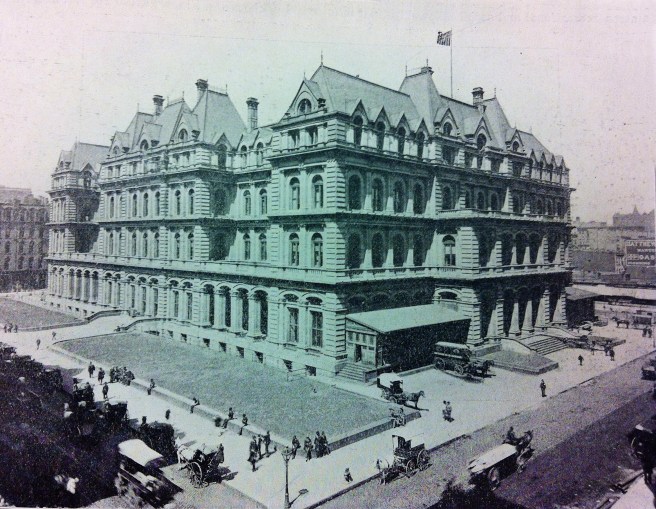
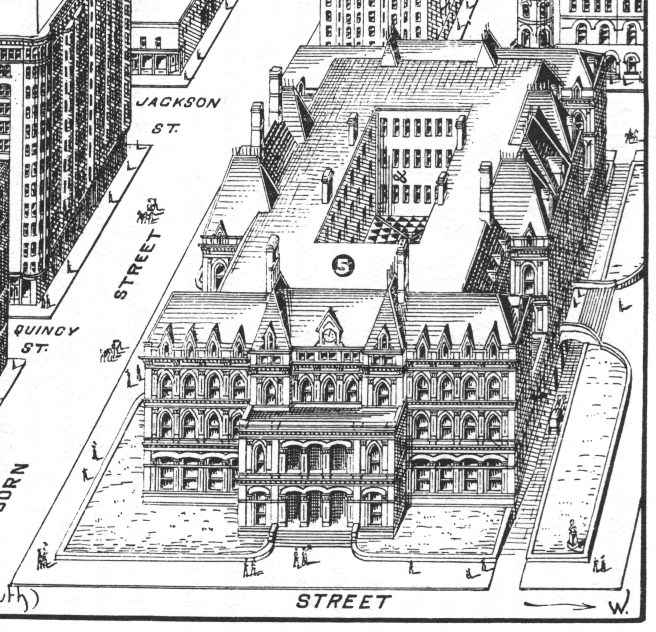
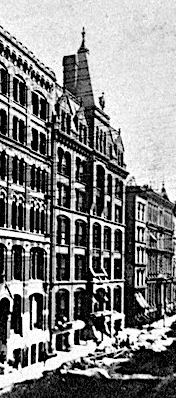
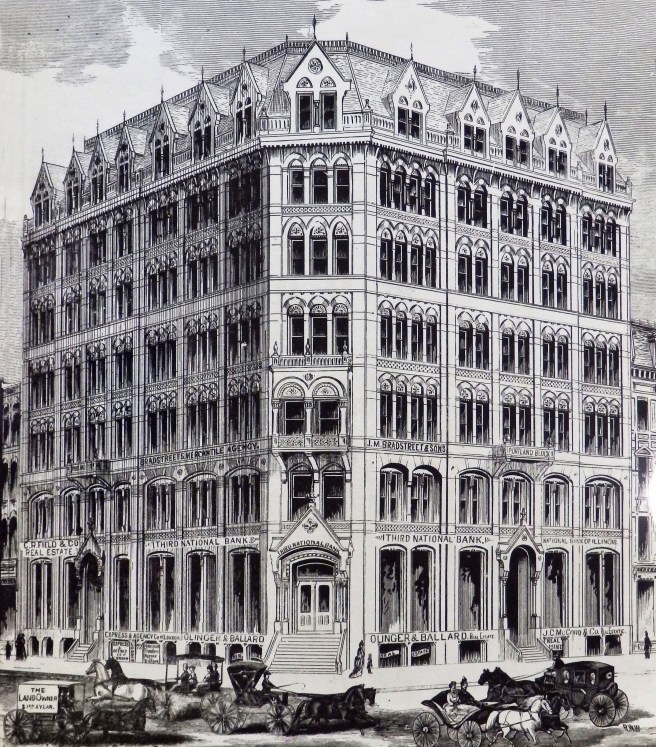
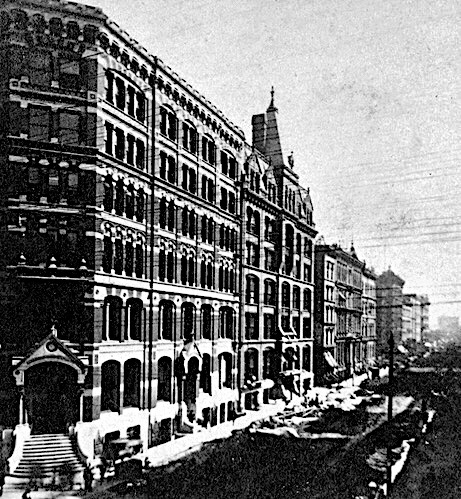

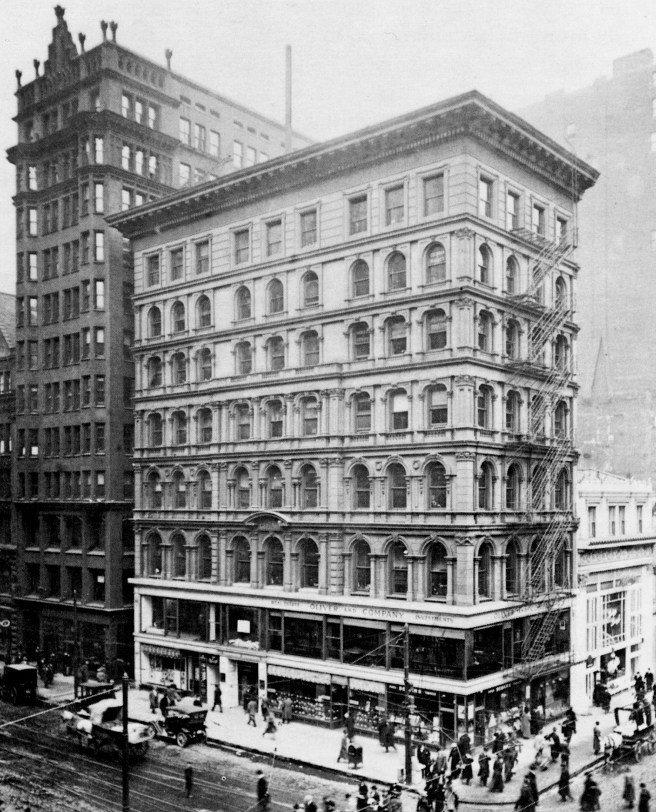
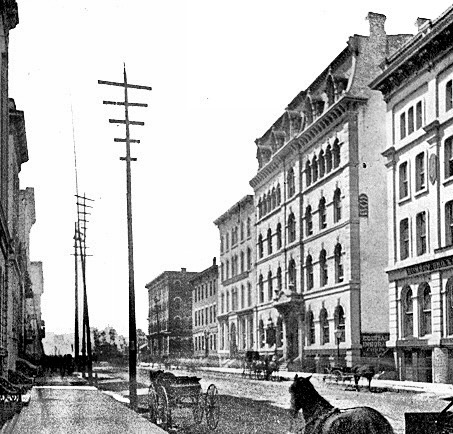


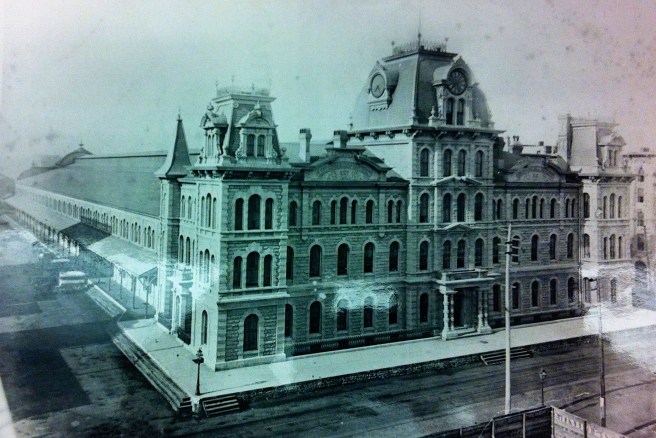


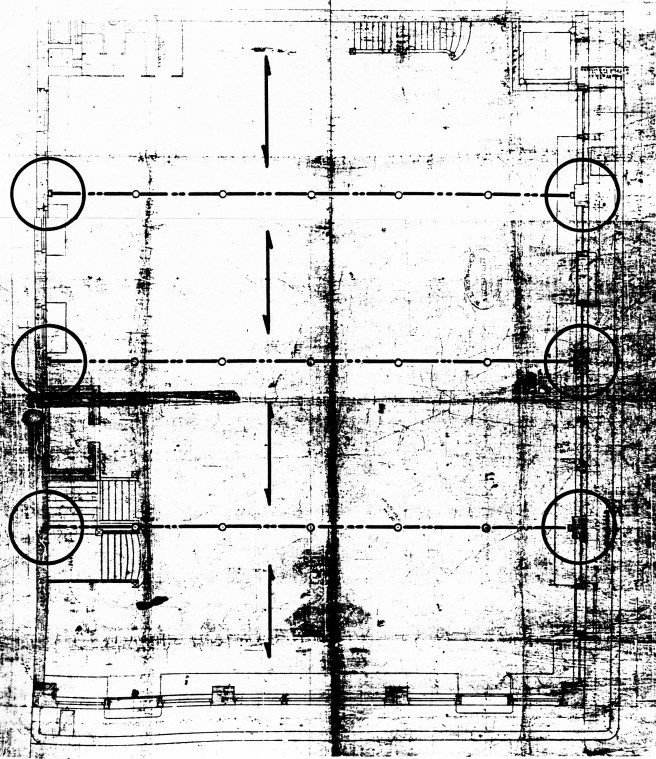


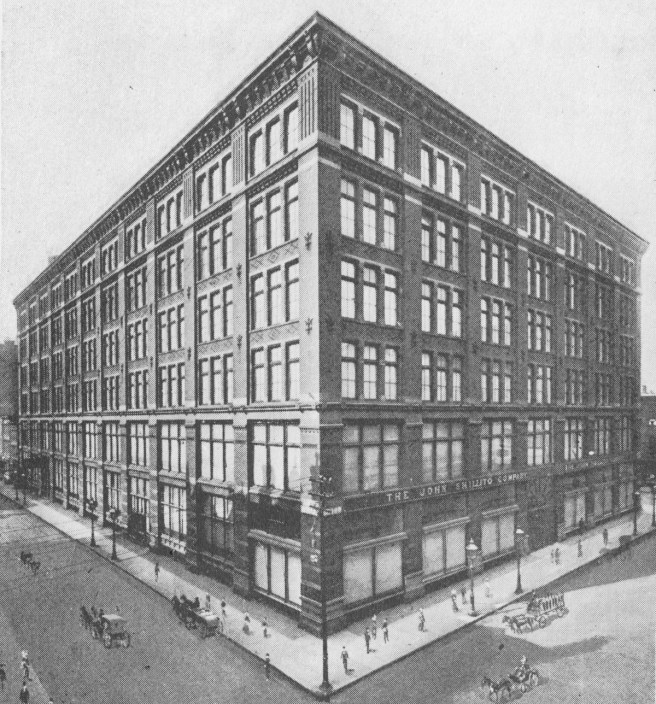
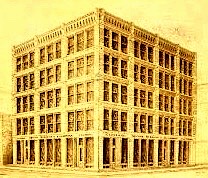
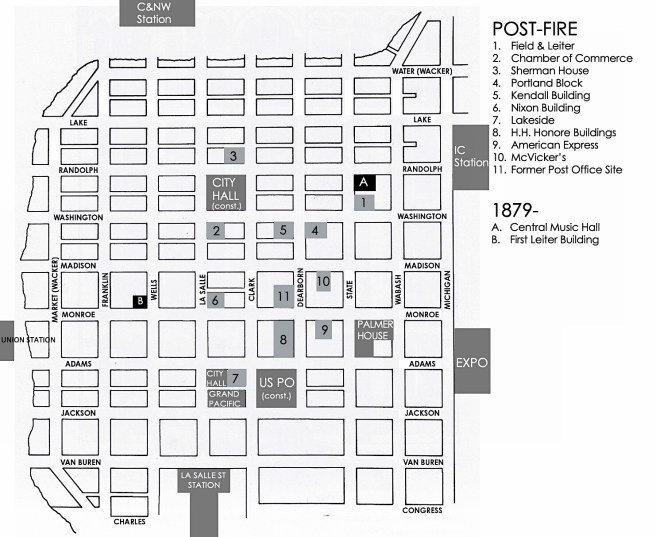
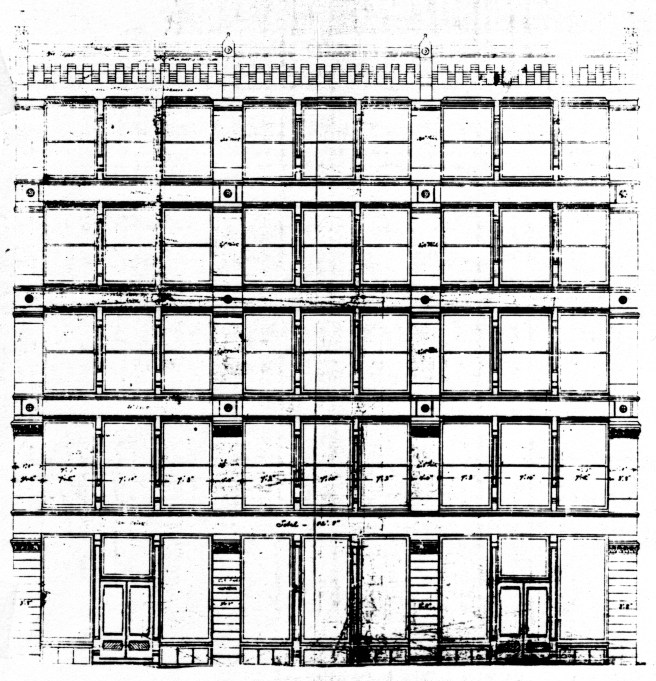


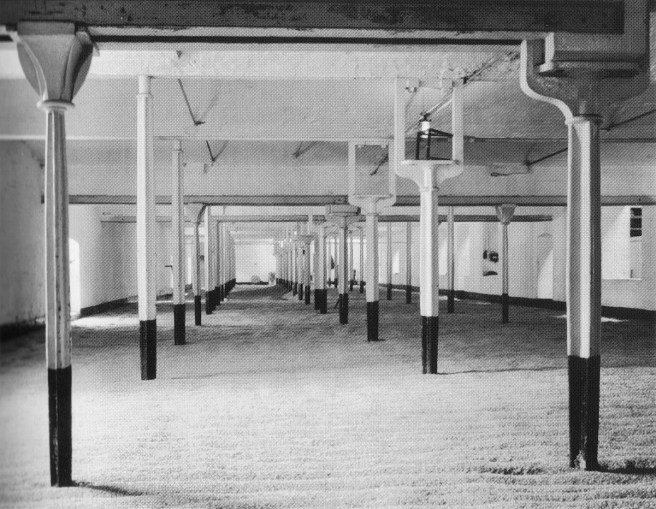


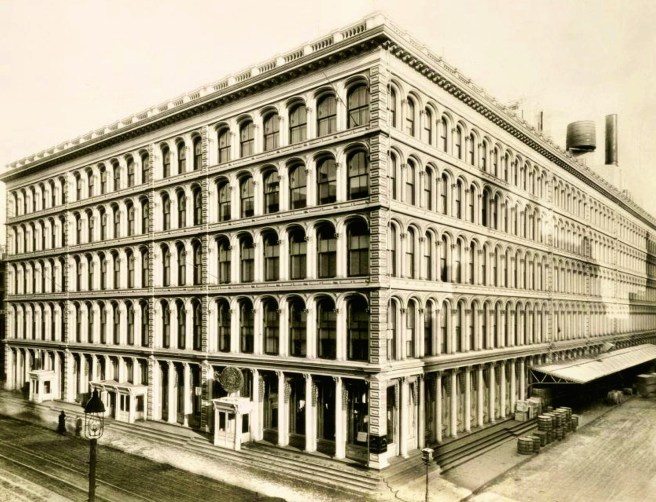
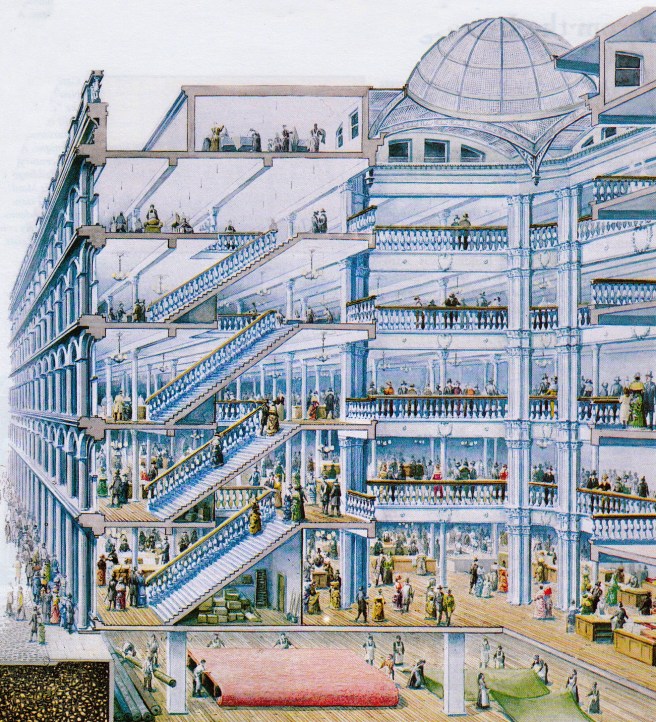


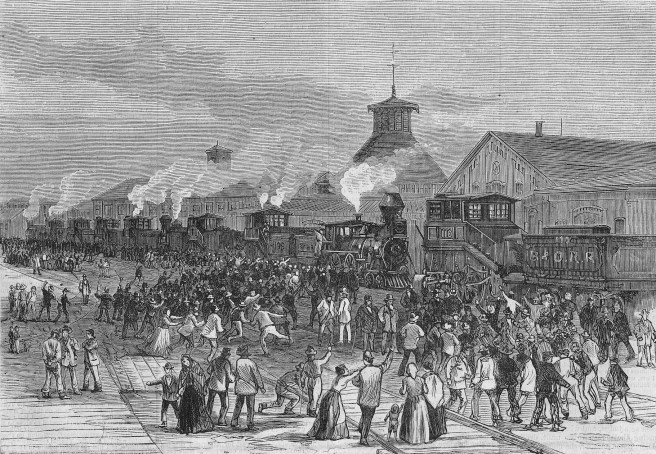


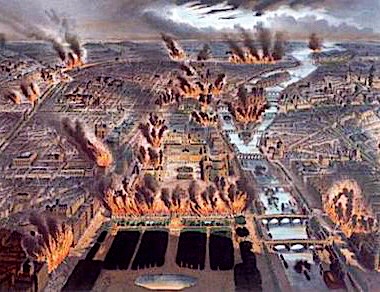
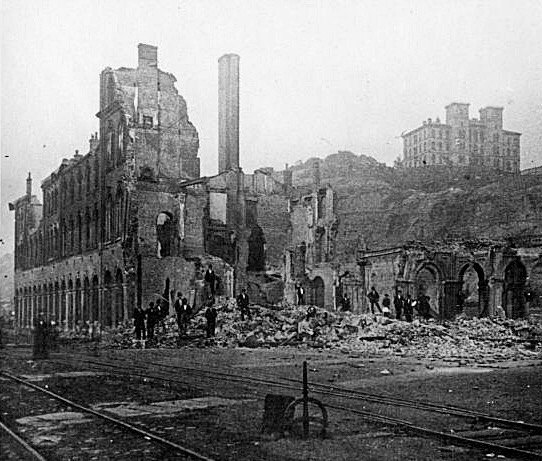
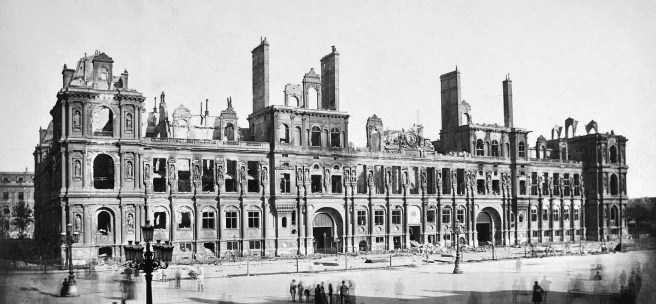
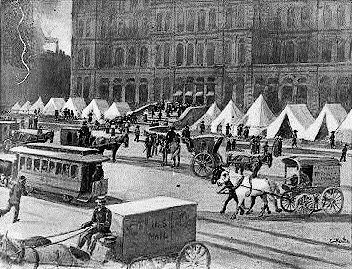

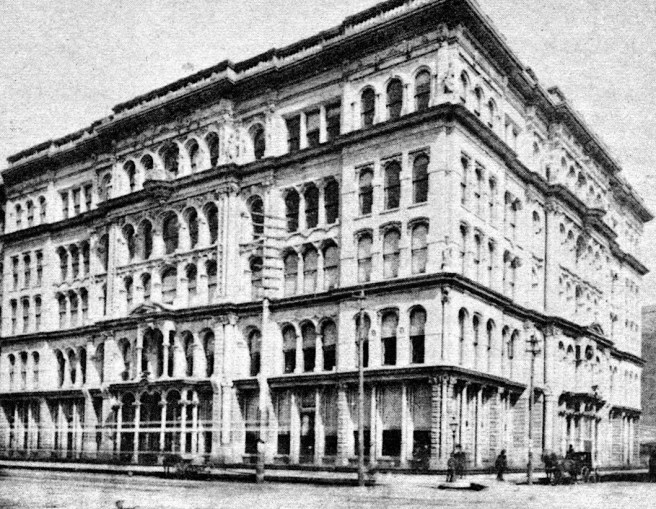
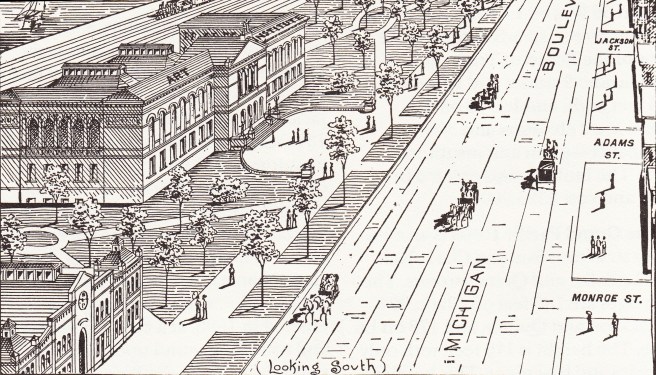
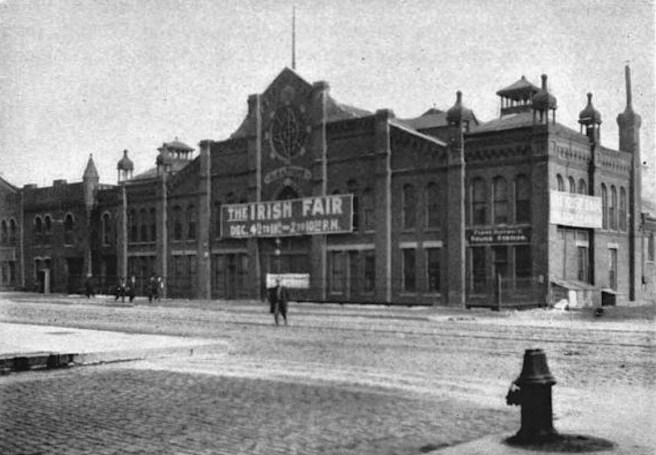


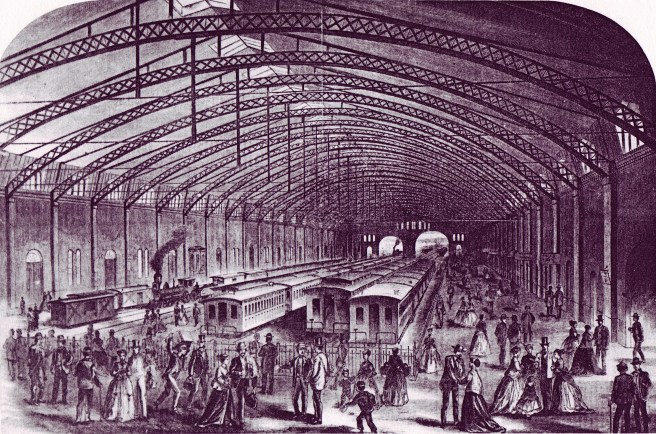

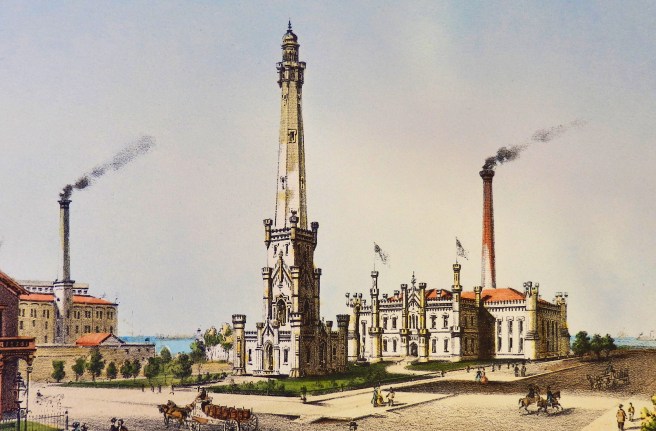


 The Architecture Professor